Selected Extracts from Our Interviews
CICNS
Selected Extracts from Our Interviews
with jurists, sociologists, historians and other witnesses of our society…
The spoken language has been retained.
A book gathering the entirety of our interviews will shortly appear under the title “La France et ses minorités spirituelles, une liberté en danger”

Anne Morelli (historian):
(…) When one says cult, it frightens. When one speaks of a religious minority, it rather gives an impression of sympathy, or of empathy towards a group that does not have the same weight as others, and so it is very important to weigh, to weigh up, these terms. We have here, at the university of Brussels, a reflection precisely on the passage from one status to the other: when is one called a religion? when is one called a cult? when is one a heresy? And the conclusion of this reflection, conducted in the course of a colloquium held at the Interdisciplinary Centre for the Study of Religions and Secularism, is that the power decides the label. One has an official title, if you like, of religion, or else one is considered a cult, a heresy… It is the power that gives this label, that decides who will have the label or not. The relationship to power is therefore essential, and this since before the birth of Christianity, since the Roman era, when religions were inserted into the Roman empire through a process that moved them from a marginal religion to an official religion. And still today, that is the case. That is to say that, broadly speaking, we consider religions those that have this label, and that those that do not have this label are called cults, or new religions. It is extremely important to agree first on the weight of words.
(…) If one says “cult”, it means one considers that there are good religions, the big ones, those that will be the object not only of recognition but also of financial support, in one form or another - even in secular France, of course, church repairs are paid for, chaplains are paid, in Alsace-Lorraine even the salaries of priests and pastors are paid - so these good big religions are entitled to every consideration, they are consulted on ethical questions, they are given places on television, on the radio, in the media, etc. Whereas the religions that are not labelled, those are the object of the power’s distrust, and the power organises against them, more or less, I would say, a witch-hunt, a persecution, in one form or another, by highlighting the difficult or delicate moments that can occur in any human group whatsoever, and by presenting these moments as the norm of all the marginal religious groups. Nobody thinks that all priests are paedophiles, but the rumour is spread that those who belong to so-called “cults” are perverts of every species, and commissions are organised to keep watch on them, to pursue them, to evaluate their presence in groups, to evaluate their lobbying, etc. So there is an extremely differentiated treatment of two phenomena which, from a sociological point of view, are entirely alike. What is the difference, from a sociological point of view, between the Jehovah’s Witnesses and other, better-established religious groups? It is extremely difficult to measure.
(…) The media very often centre their vision on the tale of the penitents, what I call the penitents, that is to say people who were in a group and who left it. And obviously they are not happy, because they spent time, money, devotion, on a cause which, after the fact, does not appear to them a good one. And that is true in religion, it is true in politics too (…) It has a juicy side, since there you have a terrible critique of the structures of the church or the party one has left, and one never listens to the people who continue to be Adventists, or Scientologists, or Jehovah’s Witnesses, and who are happy, who receive something which, from the outside, does not appear obvious to me, but they are content in their movement (…) One does not take the trouble to give an objective vision of the phenomenon and one fixates on the malcontents. And so one has an extremely biased view of reality.”
(…) Me, I assert that I have been a victim of mental manipulation, because it is forty-five years since I last went to catechism and I can still recite to you the Our Father, the Hail Mary, the ten commandments, the credo, etc. (…) So must catechism be banned? Well yes, if one is logical and wants to ban all mental manipulation, that is where it begins, obviously (…) Or else one says: well, one cannot say that it endangers democracy. I was mentally manipulated but I got out of it, all things considered, I abandoned my catechism. Mental manipulations are everywhere, there are some all the time, there are some in the political parties, on television, in the big religions, in the small ones.
(…) The anti-cult associations, which I have called “the cult of the adversaries of cults”, worry me a great deal, whether in Belgium or in France. These are people who are fixated on one problem and try to unearth their enemies everywhere. So I think it is quite worrying that they are subsidised to hunt the cults (…) And these groups, as they are paid to discover scandals, well, I would say they are somewhat driven to create the scandals and to play them up.

Maurice Duval (ethnologist):
(…) The media are the sinew of war, they make the rain and the fine weather, they can launch rumours, true or false. That is the real power of our society. If the media have an interest - because it brings ratings, because it works, etc. - in manufacturing fear with the groups called cults as its object, well, they will do it, and it will work. People will go along. I could develop heaps of examples that demonstrate it. From the moment the media say it, people think it is true, even if in the abstract they know they are being deceived by these media. Concretely, when they watch and listen, they acquiesce, they say yes. And that is the problem.
(…) The cult hunt is fairly typically French, it is different in other countries and does not exist in a certain number of others. One may therefore ask: “why?”. I looked for the causes, I had trouble finding them. But, in the end, one can say that in France it is our “axis of evil”. In the United States, they do not need the movements called cults, people are free to believe what they want. They do not need that, since they have another axis of evil, which is terrorism with everything Bush developed. We do not have that axis of evil, and our French-style axis of evil is the cults. And if you speak of cults in the street, people will tell you: “yes, yes, that is evil!”.
(…) Why is it in the interest of the men and women politicians of this country to continue the fight against what they call “the cults”? Since one sees that there is no object, since the offences are insignificant in number and in kind? It is because the fight against the cults manufactures collective fear (…) The manufacture of collective fear is a political ingredient of the first order insofar as, when there is a collective fear, one can manipulate the masses in a way without equal. Look at what was done in the United States with terrorism, putting everyone in the same sack, moreover. It was no longer a fight against terrorism that was at issue but a fight to make a political point of view prevail which justified all-out repression. Well, in France it is the same thing. And this fear means that people agree to accept retreats of democracy, in their own interest, they believe, since it “will make it possible to protect them”. Collective fear makes it possible to roll back democracy with a magic trick, obtaining the assent of a majority of our fellow citizens. And that is the great victory of the anti-democrats: to manage to have the endorsement of the majority of our country’s population for rolling back democracy in order better to fight the cults. Without anyone asking the question: “But what is a cult? What are these people?” There are only ever partisan debates in the media, which do not open the mind but close it.
(…) I am not at all optimistic about what the State is putting in place - none of these bodies seems to me worthy of trust - and I think the only optimism one can have is the awakening of people’s consciences, saying: “No, stop!” If people say nothing, the State will continue as it has been doing for a good while, becoming more and more repressive. It is something that worries me a great deal and on which one must be vigilant. What is happening is extremely serious, for from the moment that system serves political interests, there is no reason for it to stop. I believe in the ant’s work that consists in awakening consciences, in saying: “careful, we are on a path that is taking us into a domain where we will be more and more deprived of democracy”. There are pockets of totalitarianism in our society, and if we do not watch out, if we do not awaken consciences, it will go ever further. It is the duty of every citizen who has become conscious of it to share that consciousness around him. It is a duty. I think one cannot look at oneself in a mirror if, from the moment one has become conscious of the danger, one does not do what one can to move things forward in this domain.

Jean-Claude Guyard (kinesiologist):
(…) Any number of newspaper articles, but also television programmes, end with a call for denunciation. They are looking for victims of Kinesiology or of something else. How many millions of people have seen these programmes, read these articles, always very convincing? It always ends with “if you are a victim, contact…”. For them to be looking for victims to that extent, they must be short of them! They are defending their stock-in-trade, their subsidies, and also perhaps a certain vainglory. In the old days, the ladies of the 16th or the 7th arrondissement had their poor; now they look for victims of the cults, and as these are phantom cults that do not exist, they pass themselves off cheaply as heroines, they play Zorro, they take themselves for saviours of a humanity victimised by the cults. Only there it is, I have the impression they have great trouble finding victims. These poor ladies are short of poor people and short of victims.

Jean Baubérot (historian and sociologist):
(…) I think one may ask the question of psychological subjection, of mental manipulation. But on condition of asking it at the level of the whole of society, that is to say on condition of also asking it at the level of advertising messages, of political parties and the means they dispose of, etc. And then, of trying to see whether one can have a rigorous definition of psychological subjection, of mental manipulation. I am not against asking all the questions one wants, but I am against asking them about certain groups, certain categories of individuals, certain persons, and refusing to ask them about others.
(…) Have we seen a multiplication of affairs in which there was ill-treatment of children, in which there were deaths? No, not at all. The country has been extremely calm (…) And suddenly there is this hardening of the MIVILUDES, which is due to no affair. The MILS at least could pride itself on the affair of the Order of the Solar Temple or things like that. So one wonders whether it is not solely factors of politicking, of pressure groups, of the people I spoke of earlier: the fierce anticlericals and the pre-Vatican II Catholics, who applied pressure and obtained a certain change which, I hope, is not definitive, but which is indeed worrying.
(…) The law of 1905 (…) asks people to respect tolerance, to respect civil peace, to respect the fact that people do not necessarily think as they do. It establishes the same penalties whether one violates the freedom to believe or the freedom not to believe. There is a very strong reciprocity in the law, so it offers everyone rights. But it is social forces, political forces, that apply pressure and make things go more or less well, more or less calmly, more or less aggressively. One must distinguish the two clearly, otherwise one will not understand that the law gives guarantees and that the real problem is the doing of the pressure groups, which somewhat divert the normal application of the law.

Raphaël Liogier (sociologist):
(…) How does one manage to be classified as “normal”? (For that) there is no other possibility than to try to be close to the official federations, no other possibility than to try to have the “official aesthetic”, to correspond to the dominant culture, to the dominant taste, to eliminate every educational project, every project of transmitting values. You do that, and possibly, if there are not too many letters of denunciation, you climb gradually from the bad religion to the “unrecognised” religion, the one that is left alone, and possibly, why not, to the recognised religion. The good religion is the case of Buddhism. It is the good religion par excellence, which bothers nobody, which is in an intimist world, which gives the feeling of difference, of otherness, but in reality (its members) are only bourgeois Westerners of the city centres, who want to change nothing in the system, who have habits of life identical to the others’. So it looks completely different, but it is completely the same thing.
(…) In France, the anti-cult policy is a policy found essentially at the Ministry of the Interior. That is to say, it is a police policy. If it depends on the Ministry of the Interior, it is because it is considered a police problem, a problem of public order, of security. Whereas in most European countries, the policy relating to religious movements is a policy that depends most of the time on the Ministry of Justice. When it depends on the Ministry of Justice, one has not yet “judged”. Whereas police means one has already judged that it is dangerous a priori, a priori it is a risk, a priori it falls under security. That says a great deal about the spirit in which this policy towards the religious is conducted in France.

Gilles Farcet (writer):
(…) I believe it is very important for spiritual groupings not to consider themselves holders of a truth they would have to impose, or which would place them apart, above the others, and really to consider themselves citizens, to develop the citizen dimension, which can sometimes risk being a little absent or dormant. And, as citizens, indeed, from there, to be vigilant and not to tolerate that their rights as citizens and as persons be threatened, not to tolerate calumny, or at any rate to correct it as far as possible, not to tolerate other forms of manipulation or pointless destabilisation. But I believe that the only way - for those who are engaged in a path not always understood or perceived by everyone - to answer is by being themselves convincing witnesses and by demonstrating, by their way of positioning themselves, that it is indeed not a matter of an abuse or a manipulation in the sense usually understood. I believe that we all, who are engaged in these paths, have a responsibility, not of perfection, because perfection is not of this world, but of impeccability. We must not position ourselves as victims, and not position ourselves as persecuted, but position ourselves as citizens who can be vigilant with regard to the defence and respect of their rights.

Maître Bernard Biro (lawyer):
(…) The French policy of fighting the cults is Tartarin’s great hunt. The lion was hunted. The toll is disastrous. We equipped ourselves with an enormous arsenal to run, like Tartarin de Tarascon, after the wild beast haunting the public forest. Hardly any dangerous animals were found, and disastrous effects were produced in the population, notably that collective phobia which has taken hold of the country; and behind that collective phobia, a plethora of lawsuits which had no connection, such as divorces in which some accused others of being in cults. There is the toll, a totally disastrous toll.
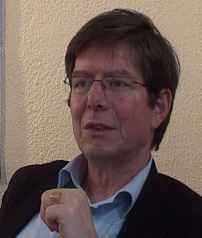
Bernard Renaud (publisher):
(…) Certain people threw themselves headlong into this battle because they had a son who had been in a movement, who had died, and certain politicians latched onto that, telling themselves it was a hobbyhorse like any other. What real stake? I have trouble seeing anything coherent behind all that. I think it is rather an action where people want political correctness, so no head must stick out, and these movements disturb, there it is, because they lead people to think differently.
(…) I think that all these movements which have emerged since, I would say, the fifties, to take it broadly, have contributed greatly to making our society evolve, a society that might have remained frozen without them. Because I think those movements brought a certain number of things, good and sometimes bad, made us react well or badly, but they made society move. And I believe one cannot erase all those contributions with a stroke of the pencil by saying “it is bad”. I think these movements have a reason for being, that they have taken part in the evolution of our society, and that in ten years, in twenty years, other movements will spring up which will also correspond, at a given moment, to something, because emergences are like an island appearing in the ocean.

Sylvie Simon (writer):
(…) We are in a politics where only the economy matters. We manufactured avian flu by martyrising animals and vaccinating them to excess, and now nothing else is talked about and this sort of collective psychosis has been created. When we hear talk of a pandemic, it is in fact a pandemic of hysteria that has been spread over the earth, and so long as people are hysterical like that, it is obvious that they can be handled, mastered easily and made to go where one wants them to go, that is all (…) So individuals must take themselves in hand and say: “Let us stop the nonsense, stop the skull-stuffing, let us try to think for ourselves”. I always say to those who listen to me: “Eradicate fear; the only things to eradicate on earth are fear and imbecility”.

Eugénie Francoeur (Quebec journalist):
(…) Spirituality just means learning to know oneself, spending time with oneself, doing a little introspection and sharing the treasures one finds. It is really just relearning to think, eliminating what is negative. Nobody taught me at school how to reflect, how to think, whereas spirituality gives me that space. How many thoughts assail us each day that are absolutely useless, wasted, negative, and drain our energy? Every human being has his spirituality and one need only leave him the space to develop it. It happens in different ways, perhaps through prayer, meditation, the martial arts… Each person chooses what suits them (…) I would like to understand how people who try to do good on the planet, people who try to give, to share, people who are not looking for money, who want nothing from you, can be put in a category of potentially dangerous people? It is a great question mark. (…) I wonder how one can speak of spirituality in a superficial way without having experienced it oneself? It is a little paradoxical that journalists who have no spiritual experience can be specialists in spirituality. In the same way, would one send a novice to cover a great political congress? No. Well, in spirituality, that is what is done. People who have no spiritual approach, no spiritual knowledge, are asked to be judges of a spiritual life. I could not go and cover the congress of your president or your prime minister tomorrow morning, I do not have that knowledge. I could learn it, I could be given ten days and told: right, prepare! And I read everything, we do a “crash course” and one ends up learning. In spirituality, the “crash courses” happen inside. And generally, ten days is not much…

Christiane Singer (writer):
(…) There is a ferocity in a certain part of the population which refuses to tolerate that there could be another form of existence. Fundamentalism is as much in the anti-religious as in the religious. There is in the reigning ideology a sort of ferocity about not having one’s nose rubbed in it, like a puppy, if one tells them: “But life can be otherwise too!”. That, they do not want, because it can put their whole system in danger. But there always comes a moment in existence, at the turn of a death, of an illness, when life takes it upon itself to crack the most concreted-over ideologies.
(…) I find the work you do (at the CICNS) tremendous. It is so important not to act as if one did not see that there is a witch-hunt of laughable clumsiness. I find it so derisory, and I tell myself it is not possible that everyone does not burst out laughing when these commandos of gendarmes arrive in places where people are questioning themselves about life and permitting themselves to ask questions in depth. It is so burlesque. There are certainly stories that belong to the criminal order, but those are the business of the courts, and that represents 1% (of these movements). And for 99%, you have people who assemble to touch that depth together. It is so important.
(…) It is monstrous to fire shells at sparrows that were pecking away joyfully. I think it is a sort of flare of fever. But I do not see it in the rest of Europe. Perhaps I am mistaken. I live in Austria, I do many courses and lectures in Germany, I have never heard similar stories told. The French have made themselves the cantors of rationalism, etc. Perhaps it has gone to their heads in a morbid way. Or else a way of diverting attention from the real problems… It is a phenomenon that is known and practised very often. I can only say thank you that there are people who commit themselves to this vigilance and support the people who are suddenly pursued for nothing. May those keep deep within themselves the conviction that they are carried by all the others, that they are not alone. That is capital. So I salute this activity greatly and I hope with all my heart that this flare of morbid fever will come back down.
(…) I was recently rereading the Decameron of Boccaccio and that of Marguerite de Navarre: characters leave Florence, invaded by the plague, and withdraw to shelter to tell each other bawdy stories for days and days, because that is difficult to do in the middle of a society still under surveillance. In our day, what are called small spirituality groups do somewhat the same thing. They leave the city, not to go and tell each other bawdy stories, because that is authorised in the city, but to speak of God. It is such a funny reversal! I would almost like to write a Decameron of today, of a group of beings who leave the police surveillance of the city to go somewhere in the countryside, in a well-secluded place, to speak to each other of their experiences, of their touchings of being in depth. That would be beautiful. You are giving me the idea for an extraordinary book! The only thing one can say is: “Wake up from this hypnosis!”

Maître Jean-Marc Florand (lawyer):
(…) The European Court of Human Rights will end up finding for the complainants and recognising that the ADFIs and the UNADFI are not of very great utility, cost the taxpayers very dearly since they live exclusively on State subsidies and, in any event, in a certain number of affairs, went off the rails and went well beyond the mission that is theirs as associations, indeed against the mission that is theirs, and went onto terrains where they should never have been found, notably by supplying inaccurate information to the police services or the justice services.
(…) The offences of “mental manipulation”: all the specialists in these questions, be they historians, sociologists, jurists, know very well that it is an offence extremely difficult, indeed impossible, to put into practice in a case file, unless one sees mental manipulation everywhere, and in that case we leave the democratic state: the political parties practise mental manipulation, the credit companies practise mental manipulation, the salesman who calls you at eight in the evening, four times in a row, to offer you a fitted kitchen with many advantages practises mental manipulation, the door-to-door canvassers who visit elderly people to install alarms practise mental manipulation. The monasteries, when they recruit, practise mental manipulation, the churches practise mental manipulation, everyone at that point practises mental manipulation. So I do not see how one could specifically allege - apart from textbook cases, for one will certainly always find a case - an offence of mental manipulation in a cult movement. It seems to me a not very democratic offence, which we know was much in use in countries that formerly did not shine for their democratic qualities.

Michel Maffesoli (sociologist):
(…) There is a distrust of those who attempt to experiment with other ways of living, thinking, praying or the like. What I can say from a sociological or a thinker’s point of view is that it is not good to stigmatise.
(…) There are rearguard battles; the various State bodies that continue to fight the cults are expressions of them, for example (…) The State crispations are real, they exist, but they do not go in the direction of history.
(…) The State needs committees, contraptions, things, sub-groups of this and that. The body you refer to (the Miviludes) is one of them.
(…) Nor must you enter into a scapegoat attitude. You must not interiorise the criticism made of you. Very often, when one “interiorises” what one is designated by, one ends up being what they want you to be. The formula is a little complicated but it says well what it means. If the new spiritualities interest you, it is by living them that they will radiate of themselves (…) The scapegoat technique is habitual. Onto an animal predestined for it are thrown the sins, the defects that are within the social body, and it is driven out, loaded with the sins of society. That is the origin of the scapegoat. It is evident that all the forms of non-rationality are working the social body. The development of clairvoyance, of astrology, of syncretistic forms of philosophy, Buddhism, Zen - like it or not, it is there, it exists. A certain intelligentsia - politicians, journalists, academics - are afraid of it, so they tend to load the animal with all these sins of the collective body in order to drive it out. It is a habitual process. One must not panic, and above all not enter into the game. (…) The important thing is first to make sure of the truth of what one has to say, of its depth, which is not easy work, and if one makes that effort, which truly demands asceticism, then there is a process of diffusion (…) That there can be blockages, rearguard battles, barriers and everything to match, that is how it is, it is the human tragedy, in a certain way. It is the property of institutions to block what is new, or renewal. But, I say it at my age, with, I was going to say, a certain wisdom, at any rate a serenity: it seems to me that if what one has to say is founded, in the true sense of the term, something that refers back to the original, to its roots, well, those roots will be dynamic - it is what I call dynamic rootedness.

Pastor Kounkou (Theologian):
(…) I knew a pastor of great worth and great abnegation who created a church in Mulhouse, Pastor Samuel Peterschmitt, who became a friend: what has he not endured! They even created an association against his church: “The association for the defence of the Victims of la Porte Ouverte Chrétienne”! And I saw reports that went out at prime time on the televisions: they come and film him, he is at the window, he asks simply to be able to give a right of reply. No, he is not given the possibility of replying. But they nevertheless permit themselves to say: “There is the great cult!”. I said no, no, there is a problem.
(…) When one writes a book that touches on the religious question, the media do not welcome it as easily as a book where every page speaks of sex. There, your success is guaranteed (…) One has the impression of a society that wants to manage idiocy to the extreme, you see, that is to say that everything that can help awaken consciousness must above all be pushed aside. It is a real difficulty and I say it firmly so that the media too wake up. Because the media are not made for one given current, a Republic is not made only for one given current. Religion is part of French reality.
(…) The movements themselves - I would say the Christians - must refuse that, must refuse to be labelled in this way, must stand up, as I do today, must tell the truth about the situations. I am sure that if one says of a public man, a politician: “He did such-and-such a thing”, he will say: “First I resign from my post, from my functions, but I want the courts to establish the truth”. And why is it done for those people and not for millions of others…? In France, I believe that if truly serious statistics were made, more than half the population believes (…) The people who have chosen the religion of atheism are a minority, except that they have been put in posts, and instead of doing the real work - giving us happiness, for that is after all the meaning of politics, since the Greeks: to create the happiness of society, the happiness of individuals - instead of that, they are there to create our anxieties.
(…) So I would say rather: one must - and I believe it is the duty of every citizen - refuse to be a slave of suspicions. At a given moment one says: “Ok!” and that too is a cowardice. You are made a slave and you remain a slave. One must say: “No, we are not slaves; no, I did not rape anyone in my ministry; no, I did not do such-and-such a thing; no, my church does not practise that; no, my religious conviction does not lead me to that kind of thing”. And what is not shown is what the movements create, the added values: those added values ought to be valorised. I see social works, I see people being helped out of illiteracy, people being helped out of drugs, people being brought out of psychiatry too, and it is true that these are often great battles.

Régis Dericquebourg (social psychology):
(…) I refuse the idea according to which at the head of these movements (for example at the head of Jehovism) there would be a dozen people who do not believe at all in what they teach and who manipulate six million people, any more than I believe that the Pope does not believe in what he says and manipulates hundreds of millions of Catholics.
(…) I had a tax audit after a journalist from L’Événement du Jeudi said on Antenne 2 that I was a notorious Scientologist. It has happened that at the moment of taking decisions in a university commission concerning me, someone said: “Yes, but he’s a Scientologist!” It is generally the Scientology accusation that comes up most and it is the most stigmatising. I obviously have an absolutely calamitous file at the Renseignements Généraux, and I will give you an example: one day a friend who is part of what is called the new age meets a member of the Renseignements Généraux charged with advising local journalists on the problem of the cults. That person told him that I was a notorious Scientologist, so he should beware of me because he had understood we saw each other, that I had paid for my house with Scientology money, and that I was a shareholder in an esoteric bookshop in Lille (which moreover has no shareholders and which refused to sell my book “Croire et Guérir”). Later his wife came to see me to tell me (his wife is an informer) that this friend was a swindler and that the hospital he was founding in Tibet was a pure swindle. That gives you an idea of the kind of procedures.
(…) These two decades are for me two sad, dark decades, in which a socialist regime tried to hide all its failures, all its corruption, by taking a scapegoat: the cults, of which it made the vehicle of every ill, with arguments as old as the anti-cult fight, such as: the cults are the Trojan horse of the United States… Already under Nazi Germany, it was said of the American sects that they were there to destroy the German people! There are people who amused themselves greatly with that, who vented their aggressiveness copiously. On one side, they were asked not to be racist, and on the other a whole population was allowed to let off steam, with practically an obligation to practise discrimination, ostracism, and I would even say racism (…) Ways of doing things that existed before were taken up again, the old myths employed against the witches were brought out again, but also against groups - read in Jean-François Mayer’s book on the Mormons what was said about them long ago. We have seen journalists, who ought to try to establish the truth, go and copy the pages of the anti-cult groups or the files the Renseignements Généraux gave them, and who sell the calendars of Journalists Without Borders saying: “See, there are journalists who die because they seek the truth!”, and these same journalists are not capable of seeking it about the Jehovah’s Witnesses, about the Evangelicals, about Scientology in France… I find that really very sad.

Maître Canonici (lawyer):
(…) Our society talks a great deal about tolerance. I believe it should talk about it a little less and tolerate a little more. It is very French: we get on our high horse, we give lessons in tolerance to the whole world, but I believe that what the public authorities are doing with regard to the minorities who think differently or live a spirituality different from the “official” or “State” spirituality - even though the latter supposedly left the State’s bosom in 1905 - must lead us, at one moment or another, to consider at last, as adults, the question of the new spiritualities. We are not a reforming country, that would be known, and we are not as tolerant a country as people like to say, and very often these affirmations about tolerance are in the end only a very convenient screen behind which to shelter nicely in comfort and common mediocrity, to avoid speaking of the new problems that arise.
(…) What is worrying in this case is that we continue today to function with a law that invites the condemnation of persons, of movements - criminal condemnation, that is -, even though the notions that would found the charges are not defined by the law. That, I believe, is the most dangerous thing there can be for a state governed by law, and I see in it for my part - I believe one must say things as they are - a pocket of totalitarianism. Certain authors speak of it; I believe that is exactly it.
(…) Does a proven situation of discrimination exist in France with regard to certain spiritual minorities? In the light of what we have just said, the answer is “yes”. There is manifestly a discriminatory situation which is - and this is where things are perhaps gravest - established, instituted, by legislation. We are dealing with very vague notions, so vague that a risk is made to weigh, in my view, on all the people who would not have a classical or academic way of thinking. That seems to me quite dangerous. One ought to think, at some point, that one can perhaps trust the citizen and truly leave him the choice of the conditions of spirituality he wants to live daily.
(…) France will have to explain itself seriously about its way of proceeding, and be held to account for leaving to a commission the task of publishing a report (editor’s note: the 1996 parliamentary report on the cults) of an unbelievable intellectual indigence, and of pointing at groups or “cult movements” without that research having been adversarial.

Christian Tal Schaller (writer, lecturer):
(…) We had the great surprise, after barely a year of operation, of having, in October 1997, the visit of a multitude of gendarmes armed to the teeth. They had two warrants for search and custody. One was in connection with the story of the Solar Temple. That is to say, we were presented on that warrant as associated with the Solar Temple, as if we were an extremely dangerous cult. The gendarmes were persuaded they were coming to save the trainees from a collective suicide that could not fail to happen. And after two days of search and custody, that part collapsed totally, since we had absolutely nothing of a cult or an extremist movement about us.
On the other hand, there was another part: infractions of the hotel-trade laws. We were not yet in order with the commercial register, our premises were not yet entirely up to standard for receiving groups, and we had trainees helping us renovate the premises, which, for the judges, was illegal labour. It was for that part that we went before the court of Valence, the following year. And to our great surprise, because these are truly benign infractions, we received not only an extremely high fine but also a strange penalty, which consisted in forbidding us for 5 years to organise courses and lectures. It was a very discriminatory measure which had, in the end, no relation to the infractions found. And it was then that we understood that, in a way, we were being pursued in court for infractions that had been found, but with the idea all the same of making us pass for a cult, even though everything had shown we were not one.
(…) I believe the real problem is that when people are afraid, it is because they are ignorant. Ignorance is the cause of intolerance. It rhymes: ignorance and intolerance. When people take the trouble to inform themselves, they discover that what frightens them is not as dangerous as they believed, in a way. I believe it very important today that everything new should be able to emerge, and that the people who are searching for new solutions, in the domain of health, of spirituality or of housing, of ecology, should have the space of creativity they need. Trying to normalise all individuals and bring them back to a conformism in which everyone is holed up in fear and afraid of rumours and afraid of their neighbour is not a solution. And I also believe that this demonisation of people who go towards new experiences makes no sense. Because one cannot oppose something that is a little like when day breaks. The day that is breaking is individuals who want to take themselves in hand and stop obeying structures that oppress them, and who want to manage their lives. It is a true rebirth.

Maître Pérollier (lawyer):
(…) What is at issue is not that one should ask questions about the notion of the cult, or about the problems it can pose. Me, that does not bother me at all, I think it is part of free research, of free expression. The problem resides in the drawing up of lists. The central problem is there. The nominal accusation of groups publicly accused of resorting to practices, to methods that are reprehensible - to use a very vague word, but one that falls under criminal offences or at least civil fault - that seems to me very grave, and this way of proceeding under cover of parliamentary immunity is scandalous and ends by depriving such an approach of all legitimacy.
(…) A question that seems to me essential is that of the judicial decisions that may have intervened since 1996. It will soon be 10 years: if these 172 groups were truly all very dangerous, as the report said, they would certainly have been the object of multiple convictions since that time. But one thing seems certain to me: if the 172 groups had been massively the object of convictions, civil or criminal, I am certain that would have been one of the first arguments, if not the first argument, advanced by all the anti-cult associations and all the people who fight the cults as they understand them. That has never been the case. One can therefore deduce, and for me there is no doubt about it, that the immense majority of these 172 groups have never been convicted, either civilly or criminally.
(…) If one had to reflect on the real victims of these anti-cult campaigns, I would say that all told, from the 1996 report onwards, there are 172 listed groups = there are 172 victims. And when one says 172 victims, it is 172 multiplied by the number of people concerned, which makes a very large quantity.
(…) Even if certain groups did indeed engage in certain reprehensible behaviour, that does not justify, even against them, this list procedure. Even those are victims of an unacceptable procedure, a procedure of media lynching, of proscription lists strongly resembling what happened under Vichy. One must be clear and plain. And that allows me to put the accent on the role of the police, and of a very particular police which took an enormous part in all this: the Renseignements Généraux, a police service created under Vichy (…) There are people who are afraid now, afraid quite simply of stating their ideas, their convictions; there are people who hide and who are afraid, who no longer dare to broach a certain number of questions in their family, with their work colleagues; it is something that truly exists, and that alone creates victims, creates an unease.
(…) The current situation is very worrying, and the absolutely scandalous collusions between China and France on this problem are particularly worrying. Once again, that can change, but it is unheard of that France, almost officially, through official bodies, should have collaborated on this plane with the Beijing regime, which uses torture, assassinations and systematic repression against a group qualified as a cult in China (…) When the problem of the Falun Gong group was raised, I remember hearing with stupefaction the presenter of the 8 o’clock television news, on a great national channel, use without any difficulty the term cult because the Chinese authorities had called it a cult.

Maître Joseph (lawyer):
(…) Around 15 December 1995, a television crew from a public channel makes a report on an agrarian community, a report which, according to them, will be sympathetic: “Don’t worry, we will simply talk about your experience of organic agriculture, there will be no problem”. What the group does not know is that this report will be entirely doctored, that the answers will be mixed up, that sentences will be cut, in such a way that when it is broadcast at a prime-time hour, the people will appear completely daft. A week later, on 22 December 1995, following the ratification by the National Assembly of the first anti-cult report, the list of the 172 movements is published in the Official Journal. One may say: “It’s a coincidence.” A national channel prepares a report, not yet broadcast. A week later, publication of the anti-cult report… But it does not stop there. It should be specified that this anti-cult report was ratified by the National Assembly by the unanimity of the 7 deputies present! It is not I who say it, it is the newspaper L’Humanité, which is not a particularly sectarian newspaper, it seems (article published in L’Humanité of 11 January 1996). 172 movements were examined in 50 minutes. That too is a particularity, which makes 20 seconds per file if one calculates properly. On 23 December 1995, the day after the publication of this report in the Official Journal, sixteen charred corpses are discovered in the Vercors and we are told: “It’s a collective suicide!” Who is on the scene before everyone else? Who will give 54 interviews in 48 hours? Who will announce to the whole of France: “I, national specialist, great competent man, affirm to you that it is a collective suicide. I am going to orient the investigation”? Answer: with hyphens: mister-national-anti-cult-psychiatrist-on-government-assignment. What the hell was he doing there on the scene before everyone else? Nobody knows, nobody asked him, no matter. On 23 December 1995, the day after - as if by chance - the publication of the anti-cult report in the Official Journal! About twelve days later, on 4 January 1996, broadcast on a great national channel at 8.30 pm of a programme that will panic a great many people, treating two subjects: the first group I told you about earlier, an entirely doctored report, and that so-called true-false collective suicide, on which mister-national-anti-cult-psychiatrist will speak and will of course forget to say - because normally he does not know it - that these sixteen collective suicides all have several bullets in their bodies and that they were roasted with a flamethrower, which the case file would teach us five years later. So this true-false collective suicide totally panics France, which believes people kill themselves in the cults and does not know these details at all, does not know either that the two pistols found on the scene which served for this collective suicide came from lots of the Ministry of the Interior. People do not know that. So everyone is terrorised on 4 January 1996 at 8.30 pm. On 5 January 1996, at 6 in the morning, that is to say less than 12 hours after the broadcast of the report, police and gendarmerie interventions in many minority groups in France classified as cults, on judicial warrant (commission rogatoire). Now, the jurists understood at once, but non-jurists do not understand the significance of this information. We are barely 12 hours after that report which terrorised the whole of France. A commission rogatoire is a delegation a investigating judge gives to the police or the gendarmerie to accomplish acts he cannot do himself. A commission rogatoire when there is no complaint - there was none - requires that the prosecution service have asked an investigating judge to open an enquiry into a determinate fact, an offence. When there is no complaint, and if the prosecution service asks for that, it means it has received instructions from the Ministry of Justice. That is entirely normal functioning. This whole process, between the circular from the Ministry of Justice, which goes down to various prosecution offices of France, which goes to various investigating judges, takes at minimum three weeks. At minimum three weeks. We are just after the Christmas holidays. Which means, and this is unavoidable, unfortunately, that the instructions from the Ministry of Justice took place before the collective suicide. As if by chance! What a coincidence, is it not.

Bernard Montaud (lecturer, writer):
“We are witnessing a faith in full mutation, where today there is a deep desire among beings of faith to have a more personal dialogue with God than in that sort of rigid monotheism which means we all address the same God. This mutation is not yet very well understood by modern society, that is sure; this mutation, above all in France - I who speak a little everywhere in Europe and a great deal in the United States - arouses an incredible intolerance.”
“I think we should get out of an affective level of reflection, we should, as I believe your movement does, bring into play sociologists, historians, competent people to observe this phenomenon. The principal obstacle is ignorance, that is to say the people who combat spirituality are most of the time people affected through relatives who suffered accidents, or so-called accidents, in spiritual movements. I mean that those who judge are already wounded, so already the problem is false. Moreover they judge only for the prosecution, they register absolutely nothing positive, they register only the negative, so the debate is completely distorted from the start, in its emotional intention and in the very intention of the research. So, I would say, the problem is so deep that it seems to me to be a problem of the maturity of the human species with respect to a mutation of faith.”
“We have no reason to be ashamed of our faith, we have done no harm for thirty years, we are liable for no legal offence; there is no reason for us to position ourselves as guilty.”
“As for the so-called domain of psychic manipulation, I would say that we are far weaker than French television and the football World Cup, and that everyone would be liable to prosecution.”
Sources
- Extraits choisis de nos interviews (archived copy of http://www.cicns.net/bestof.htm)
English translation of Extraits choisis de nos interviews (French), originally by CICNS.